Understanding Shotgun Chokes: How to Choose the Right Choke for Hunting and Clay Shooting


When shotgun hunters and clay shooters talk about improving performance, the conversation usually starts with ammunition. But one of the most important pieces of the equation sits at the very end of the barrel: the choke tube.
Choosing the right choke can dramatically influence pattern density, effective range, and overall shooting success. Yet for many shooters, choke selection still feels confusing. Terms like Improved Cylinder, Modified, and Full are commonly used, but understanding what they actually do – and when to use them – is what truly matters.
The reality is that no single choke is perfect for every situation. The best choice depends on the game being hunted, the target presentation, the distance of the shot, and the type of ammunition being used.
Understanding how chokes work can help shooters build more consistent patterns, make cleaner shots, and gain greater confidence in the field and on the range.
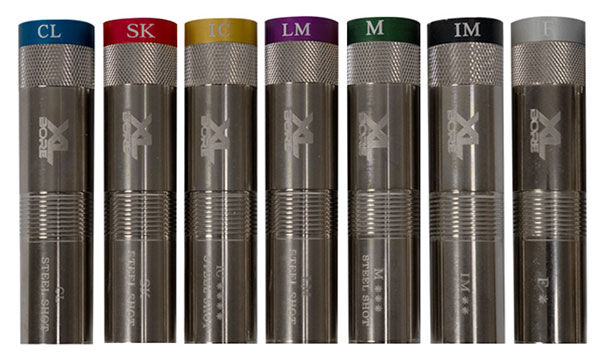
What Does a Shotgun Choke Do?
A shotgun choke controls how quickly the shot pattern spreads after leaving the barrel.
More open chokes allow the pattern to spread wider sooner, while tighter chokes hold the pattern together longer for increased density at greater distances.
Think of it as controlling the width of the pattern at different ranges.
A wide pattern can be beneficial for close, fast-moving targets where forgiveness matters. A tighter pattern becomes important when shots stretch farther, and pellet density must remain strong enough to consistently break targets or clearly harvest game.
Choke Constriction
| Cyl | Skeet | Imp. Cyl | Mod | Imp. Mod | Full | Extra Full | |
|---|---|---|---|---|---|---|---|
| 10 Ga | 0.000 | 0.005 | 0.010 | 0.020 | 0.025 | 0.035 | 0.040 |
| 12 Ga | 0.000 | 0.005 | 0.009 | 0.019 | 0.025 | 0.035 | 0.040 |
| 16 Ga | 0.000 | 0.004 | 0.007 | 0.015 | 0.020 | 0.028 | 0.035 |
| 20 Ga | 0.000 | 0.004 | 0.006 | 0.014 | 0.019 | 0.025 | 0.027 |
| 28 Ga | 0.000 | 0.003 | 0.005 | 0.012 | 0.016 | 0.022 | 0.024 |
| .410 | 0.000 | 0.002 | 0.004 | 0.008 | 0.011 | 0.015 | 0.021 |
Understanding Common Choke Types
Most modern shotguns use interchangeable choke tubes, allowing shooters to tailor performance for specific applications.
While exact constrictions vary slightly by manufacturer, the most common choke categories behave similarly.
Cylinder Bore
Cylinder Bore has essentially no constriction at all. It produces very wide patterns at close distances and is often used for defensive shotguns or extremely close-range shooting.
Because patterns spread rapidly, Cylinder Bore is rarely preferred for longer hunting shots or clay target disciplines requiring consistent distance performance.
Improved Cylinder
Improved Cylinder is one of the most versatile choke options available.
It provides slightly more constriction than cylinder bore while still producing relatively open and forgiving patterns. This makes it extremely popular for:
- Upland hunting
- Early-season birds
- Skeet shooting
- Close-range sporting clays targets
Many hunters appreciate Improved Cylinder because it performs well on fast-flushing birds at practical hunting distances.
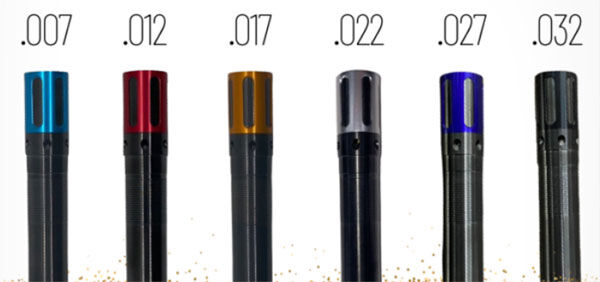
Modified
Modified is often considered the “do-it-all” choke.
It offers a balance between pattern width and downrange density, making it one of the most commonly used choke tubes for:
- Sporting clays
- Pheasant hunting
- Duck hunting
- General-purpose shotgun use
For many shooters, Modified provides enough versatility to handle a wide variety of situations without constantly changing choke tubes.
Full
Full choke produces much tighter patterns designed for longer-range shooting applications.
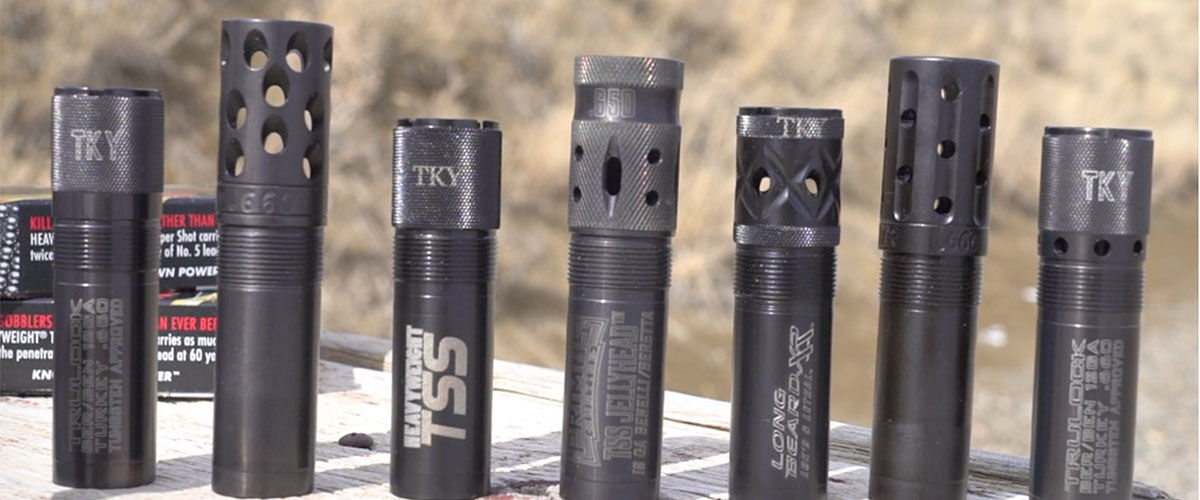
Turkey hunters frequently use Full or extra-tight turkey chokes to maximize pellet density in the vital zone at extended distances. Full choke is also common in trap shooting where targets are typically moving away and, shots occur farther downrange.
Because Full chokes hold patterns tightly together, they can be less forgiving at close distances where patterns may become too concentrated.
Beyond the four primary choke categories already mentioned, many manufacturers also offer additional “in-between” constrictions that allow shooters to fine-tune pattern performance even further. Chokes like Skeet and Light Modified sit between Cylinder and Modified, offering slightly different pattern spreads for specific target presentations and shooting styles. Skeet chokes are designed for extremely close-range targets and fast crossing shots, while Light Modified has become increasingly popular among sporting clays shooters and upland hunters who want a touch more pattern density without stepping into Modified constriction. On the tighter end of the spectrum, Improved Modified bridges the gap between Modified and Full, making is a favorite for longer sporting clays presentations, waterfowl hunting, and trap shooting. Extra Full chokes increase constriction even further and are more commonly used in specialized turkey-hunting applications where maximizing pellet density at extended range is the primary goal. These intermediate choke options allow shooters to refine performance for highly specific situations, proving that shotgun setup is often more about precision tuning than simply choosing “open” or “tight.”
Pattern Percentage/Jack O'Connor - The Complete Book of Shotguns and Rifles
| Cyl | Skeet | Imp. Cyl | Mod | Imp. Mod | Full | Extra Full |
|---|---|---|---|---|---|---|
| 35-40% | 35-40% | 45-50% | 55-65% | 65-70% | 70-80% | +80% |
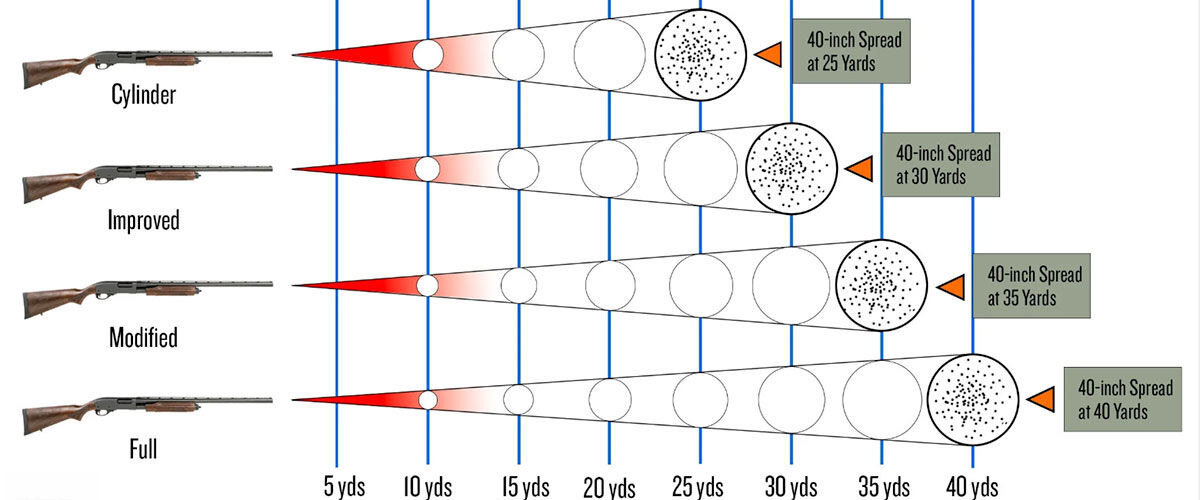
Choke Selection Depends on Distance
One of the most important concepts in choke selection is understanding how distance changes pattern behavior.
At close range, a tight choke may produce patterns that are too small, reducing margin for error on fast-moving targets. At longer distances, overly open chokes may spread too quickly, leaving patterns too thin for consistent effectiveness.
That’s why different hunting styles often favor different choke setups.
Dove hunters shooting close, fast birds may prefer more open chokes that create wider patterns. Waterfowl hunters targeting decoying ducks at moderate distances often lean toward Modified chokes. Turkey hunters, on the other hand, typically prioritize extremely dense patterns for precise shot placement at longer ranges.
The ideal choke simply matches the expected shooting distance and target presentation.

Ammunition Changes Everything
One of the biggest misconceptions in shotgun shooting is that choke tubes alone determine pattern quality.
In reality, ammunition plays an enormous role.
Different loads use:
- Different wad systems
- Different pellet materials
- Different velocities
- Different shot hardness
- Different buffering technologies
All those variables influence how patterns behave once they leave the barrel.
Steel shot, for example, often patterns differently than lead because the pellets are harder and lighter. Tungsten turkey loads may produce dramatically tighter patterns than traditional lead turkey ammunition. Even two target loads with identical shot sizes can behave differently depending on shell construction.
That’s why the best choke on paper isn’t always the best choke in your shotgun.
Why Patterning Matters
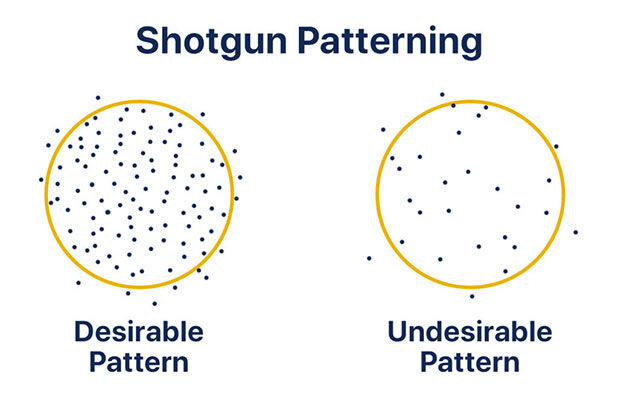
The only way to truly understand how a choke and ammunition combination performs is to pattern it on paper.
Patterning reveals:
- Pellet density
- Pattern consistency
- Point of impact
- Effective range
- Choke compatibility
Many shooters are surprised to learn that tighter chokes do not always produce better patterns. In some cases, an overly tight choke can create blown or uneven patterns depending on the ammunition being used.
Testing different choke and load combinations often reveals unexpected results – and helps shooters discover what their shotgun truly prefers.
Don’t Chase the Tightest Pattern
A common mistake among hunters is assuming tighter is always better.
In reality, an overly tight pattern can make close shots far less forgiving. Wing shooters often benefit from slightly more open patterns that provide better target coverage on moving birds.
The goal isn’t necessarily the tightest pattern possible. The goal is the right pattern for the application.
A balanced setup that matches the hunt is almost always more effective than simply choosing to maximize the available constriction.
Building Confidence Through Consistency
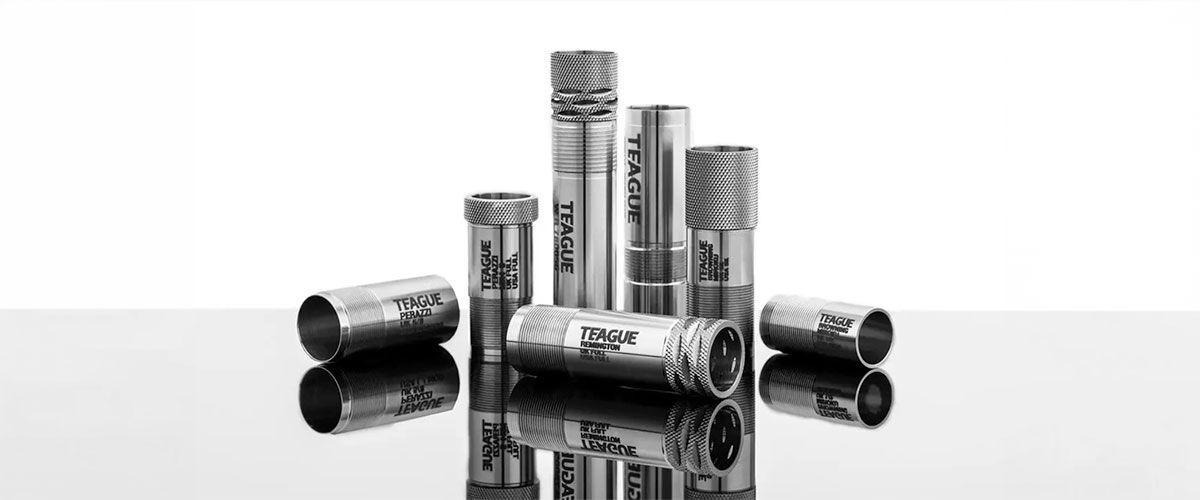
When shooters understand how their choke and ammunition combination performs, confidence naturally follows.
They begin to understand:
- Realistic effective range
- How patterns behave at different distances
- Which loads work best in their shotgun
- Where their setup performs most consistently
That confidence leads to better decision-making and more effective shooting in the field.
Match the Choke to the Hunt
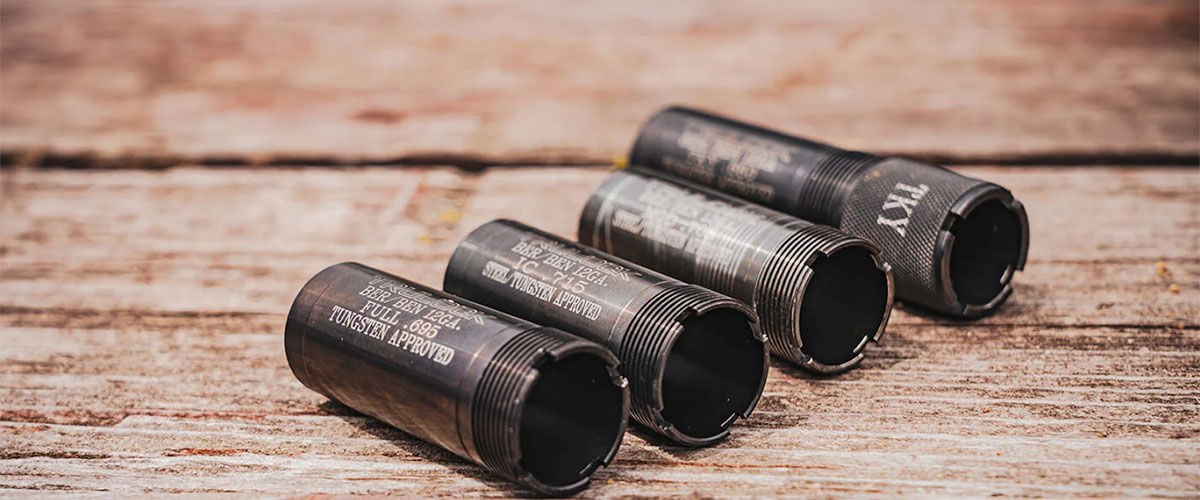
Shotgun chokes are among the simplest, yet the most powerful tools of shooters have tailored performance. Small changes in constriction can dramatically alter pattern behavior, especially when paired with different ammunition types and hunting applications.
Open chokes excel on close, fast-moving birds. Tighter chokes help maintain pellet density at a distance. The right combination ultimately depends on the target, the terrain, and the shooter behind the gun.
Whether you’re chasing flushing pheasants, calling ducks into decoys, breaking clay targets, or waiting on a long beard, understanding how your choke works – and how it performs with your ammunition – can make every shot more effective when it matters most.
Golden Pheasant
Flyway Speed sTEAL
Shooting Dynamics
White Rino