How to Choose the Right Waterfowl Load: Steel, Bismuth, Shot Size and Velocity


- Start With the Basics: Waterfowl Requires Non-Toxic Shot
- Steel: The Waterfowler's Workhorse
- Bismuth: More Density, More Options
- Choosing Shot Size for Ducks
- Goose Loads Change the Equation
- Does More Velocity Mean Better Performance?
- Decoying Birds vs. Longer Shots
- Wind Changes More Than the Decoy Spread
- Don't Forget Your Choke
- Pattern at the Distance You Actually Hunt
- One Load Doesn't Have to Do Everything
Waterfowl hunters spend an extraordinary amount of time thinking about where birds want to be. We watch weather systems, study migration reports, scout fields, check water levels, rearrange decoys, and debate whether another six-pack of floaters will finally make the spread perfect. Yet one decision that can have an immediate impact when birds finally commit is sometimes made by simply grabbing a box of shells from the shelf.
Choosing the right waterfowl load deserves a little more thought.
Duck and goose ammunition has evolved tremendously since non-toxic shot became the standard for waterfowl hunting. Today's hunters can choose from high-performance steel, bismuth, and other dense non-toxic materials, along with an enormous variety of shot sizes, payloads, and velocities.
The trick isn't necessarily finding the most powerful shell. It's finding the load that best matches the birds, distances, and conditions you're actually hunting.
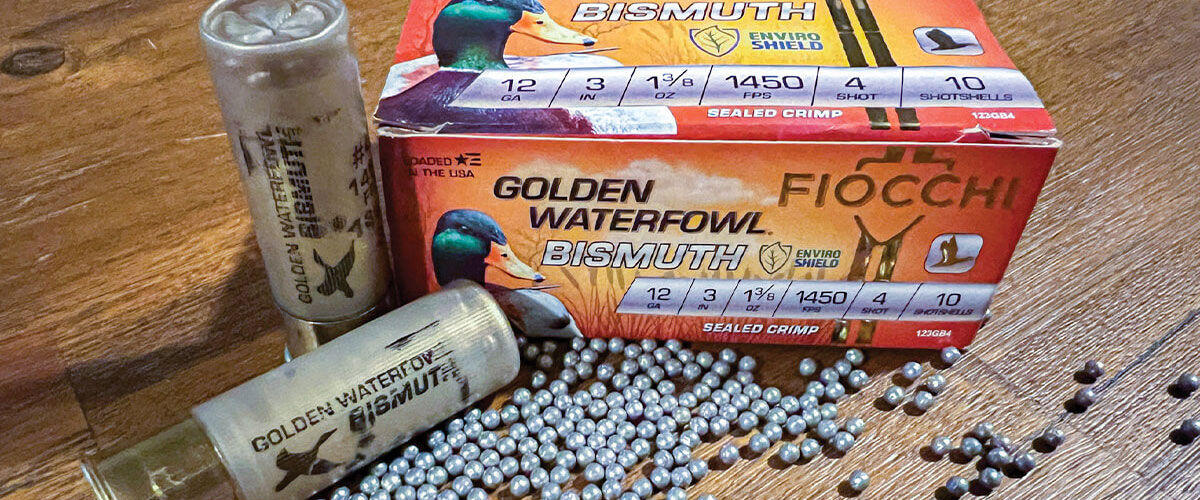
Start With the Basics: Waterfowl Requires Non-Toxic Shot
For waterfowl hunters in the United States, lead isn't an option. Federal regulations require hunters pursuing ducks, geese, swans, and coots to use approved non-toxic shot, and additional restrictions can apply on federal refuges and other public lands. That makes understanding non-toxic shot materials an important part of becoming a better waterfowl hunter.
Steel remains the most common choice, and for good reason. Modern steel waterfowl ammunition is fast, effective, and relatively affordable. When properly matched to the bird and shooting distance, it can handle nearly every waterfowl hunting situation.
But steel isn't the only option.
Bismuth and other high-density non-toxic materials have given hunters alternatives that behave differently in flight and on impact. Understanding those differences is the first step toward choosing the right shell.
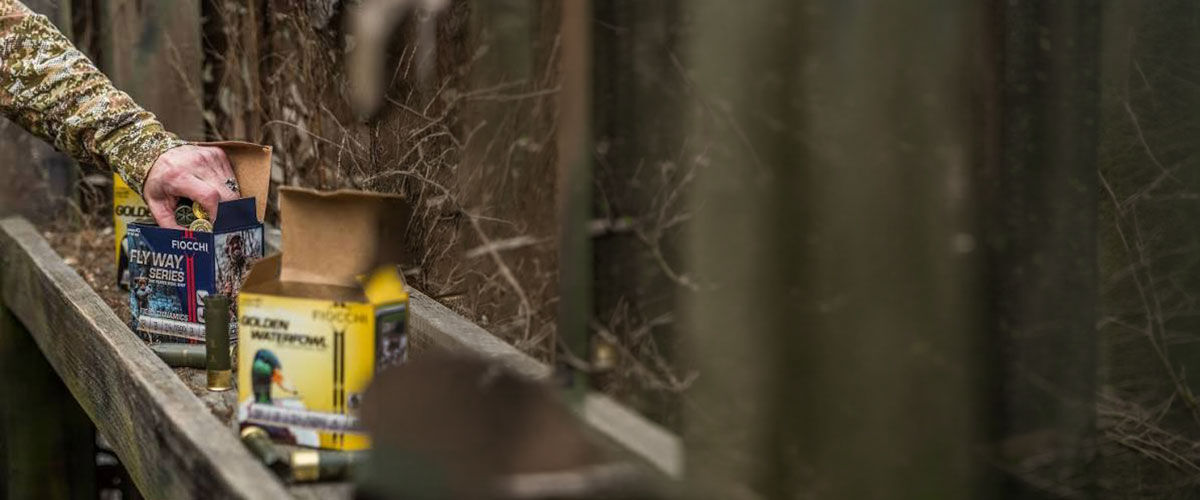
Steel: The Waterfowler's Workhorse
Steel has become the standard by which modern waterfowl ammunition is measured.
One of the most important things to understand about steel is its density. Steel is substantially less dense than lead and bismuth. That means a steel pellet of a given size weighs less and sheds velocity and energy more quickly than a denser pellet of the same diameter.
Ammunition manufacturers compensate in several ways, including higher velocities and larger pellet sizes. That's why waterfowl hunters commonly shoot steel #2, #3, and #4 shot at ducks even though considerably smaller lead pellets might be used on similarly sized upland birds.
Steel #3 is an excellent example. It provides a useful compromise between pellet count and individual pellet energy and can be a very versatile choice for ducks. Steel #2 offers additional downrange energy and becomes particularly attractive when larger ducks or occasional geese are part of the hunt. Steel #4 produces a denser pattern and can be extremely effective for teal and other close-range shooting.
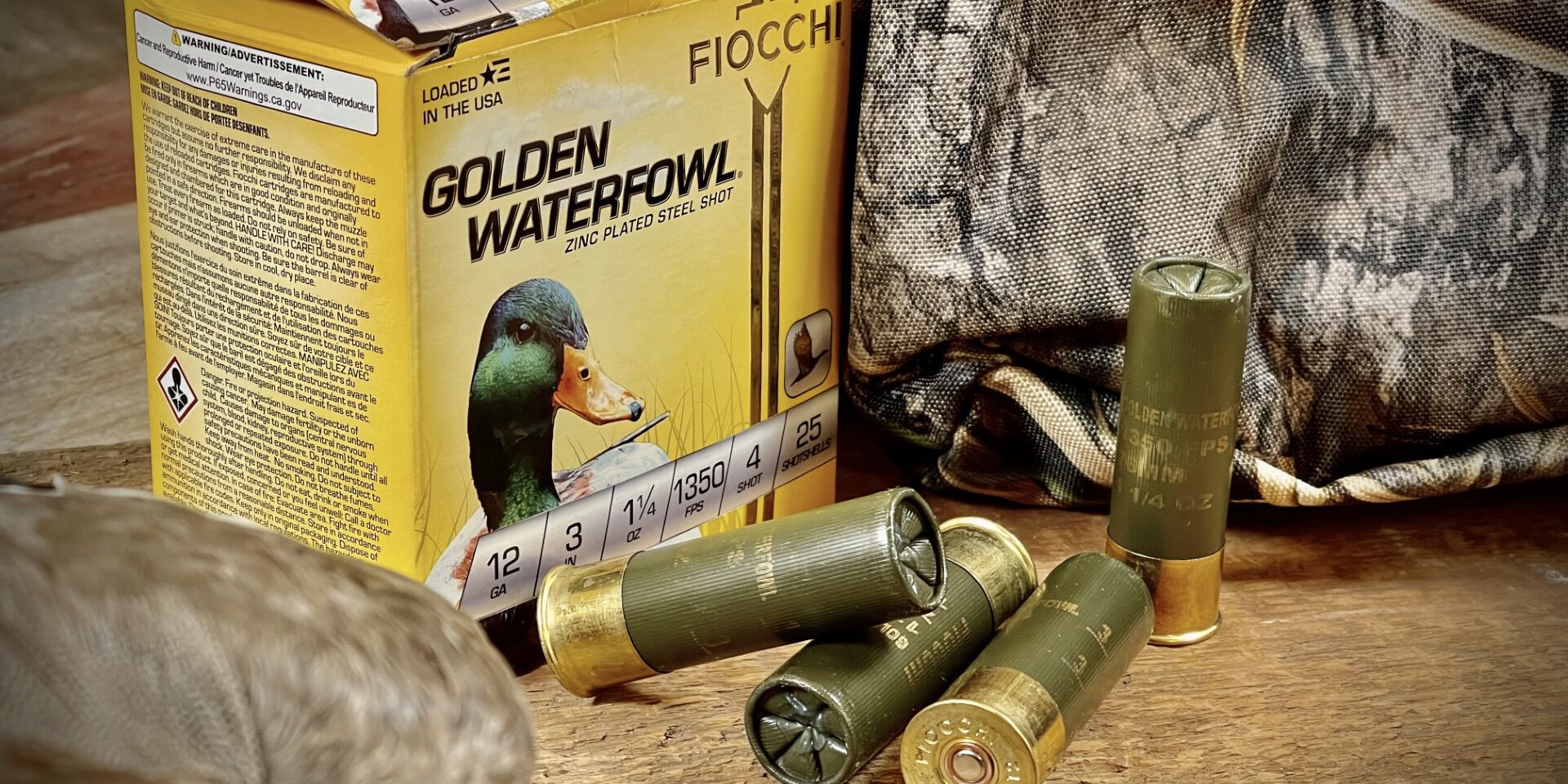
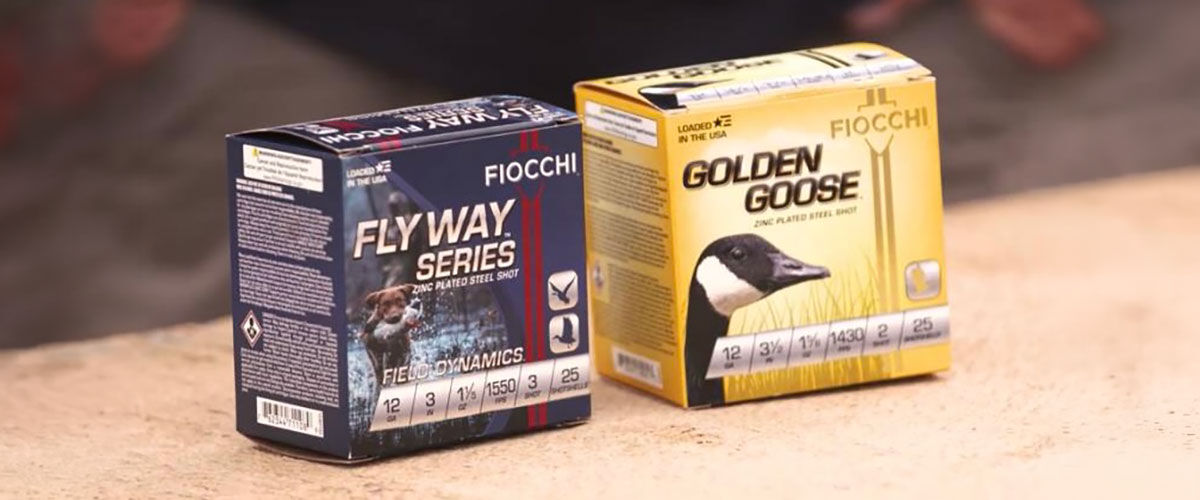
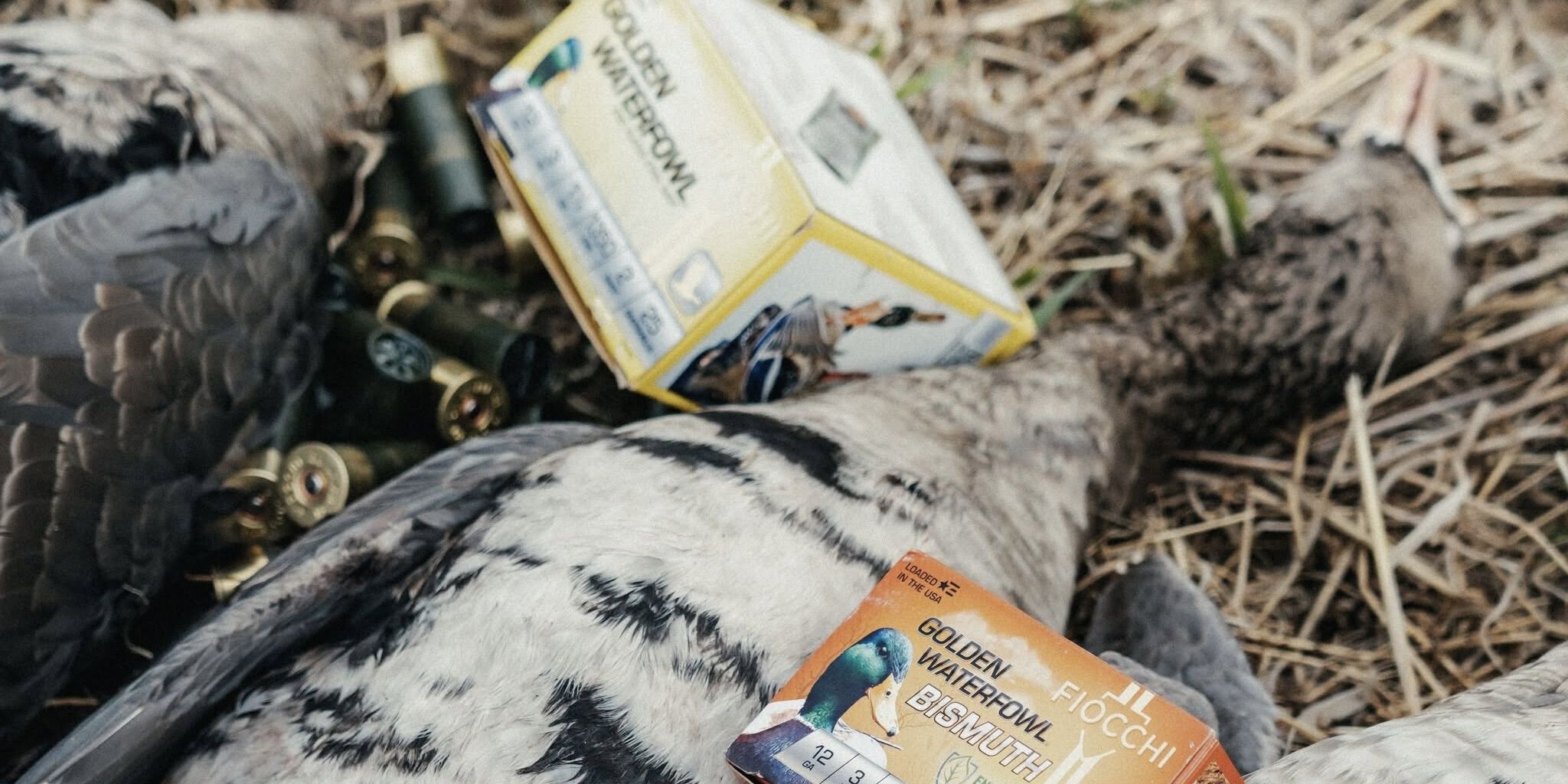
Fiocchi Golden Waterfowl is built around this versatility. The 12-gauge, 3-inch lineup uses plated steel shot in #4, #3, #2, #1, and BB, letting hunters match pellet size to everything from smaller ducks over decoys to larger late-season birds and geese.
The important lesson is that bigger isn't automatically better. Every time pellet size increases, fewer pellets fit into a given payload. Eventually, the additional energy gained from larger pellets can be offset by a pattern that simply doesn't contain enough pellets.
Hunting tip: Before changing ammunition because birds aren't falling cleanly, take an honest look at distance. Waterfowl are notoriously difficult to judge over open water and big skies. What looks like a 35-yard mallard can easily be considerably farther away. A rangefinder used on decoys, trees, cattails, or other landmarks before legal shooting light can give you useful reference points once birds start flying.
Bismuth: More Density, More Options
Bismuth provides a different approach to waterfowl performance. Because bismuth is denser than steel, a bismuth pellet retains velocity and energy better downrange. That allows hunters to use smaller pellets while maintaining useful terminal performance.
And smaller pellets mean more pellets in the payload. That's an important advantage.
Consider a situation where a hunter might choose #2 steel for ducks. With bismuth, that same hunter may be able to move to a smaller pellet such as #4 while maintaining adequate pellet energy. The smaller pellets increase pellet count, creating a denser and more forgiving pattern.
That combination—greater density than steel coupled with higher pellet counts—is one of the primary reasons bismuth has become so attractive to serious waterfowl hunters.
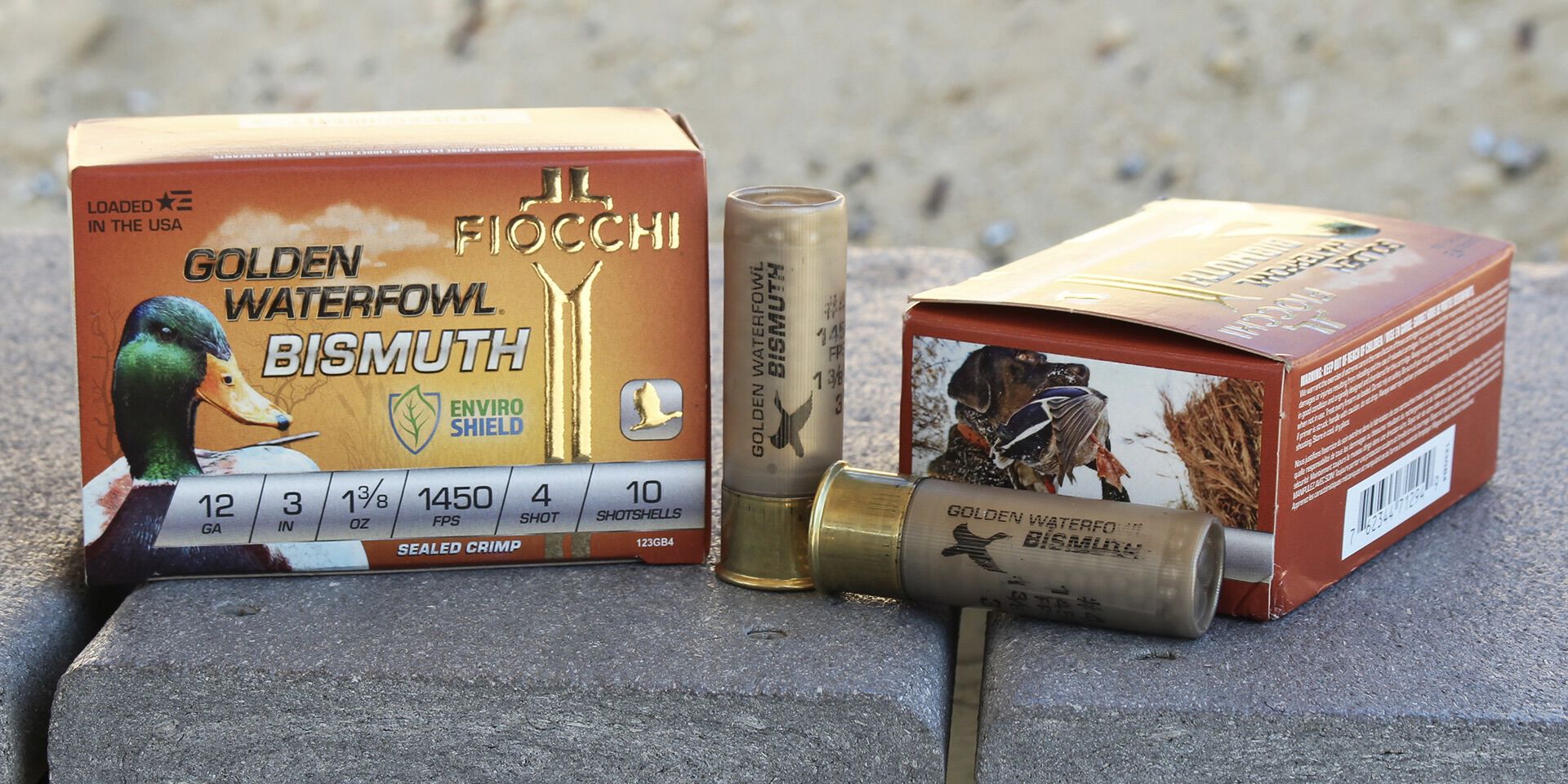
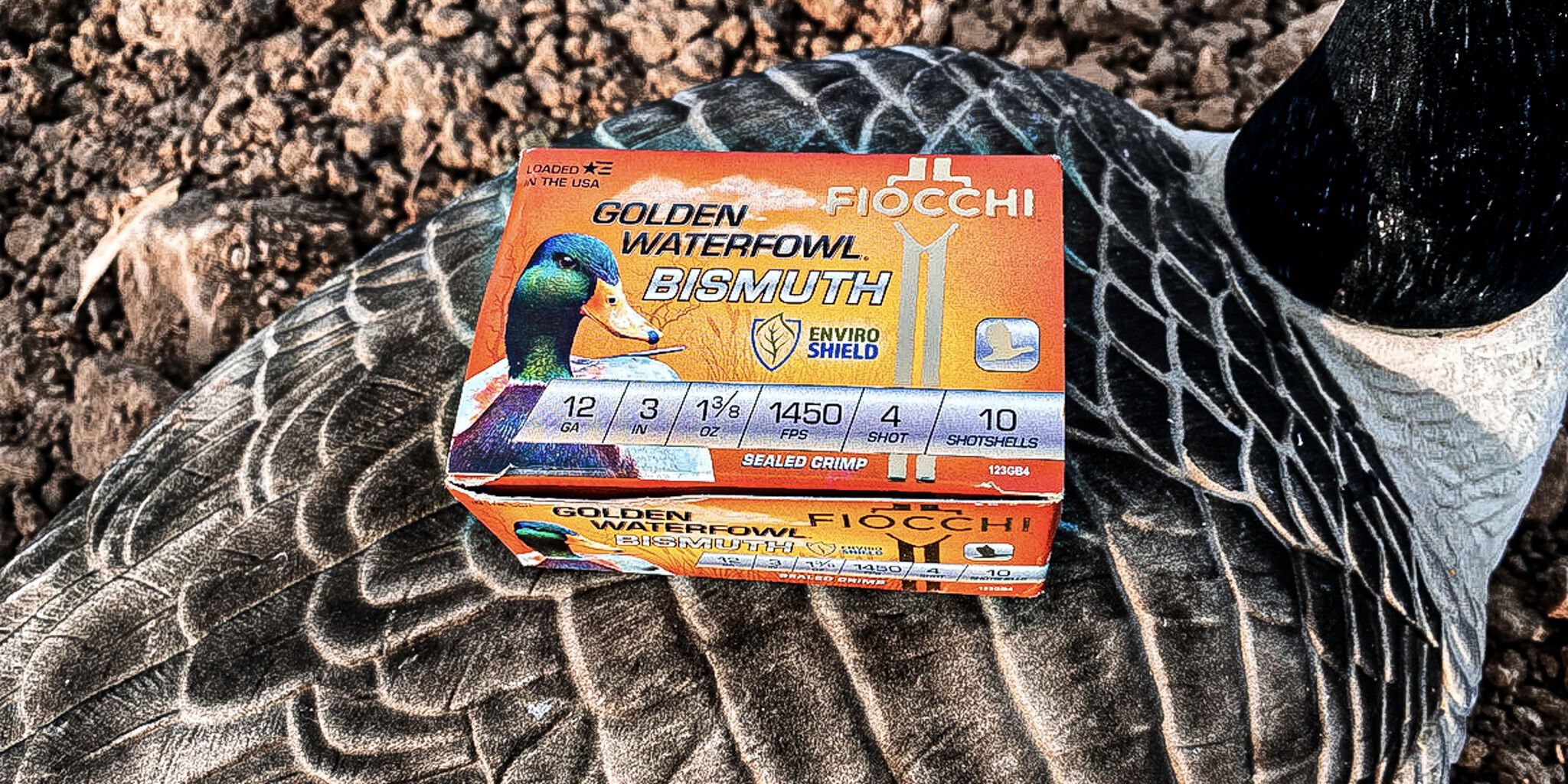
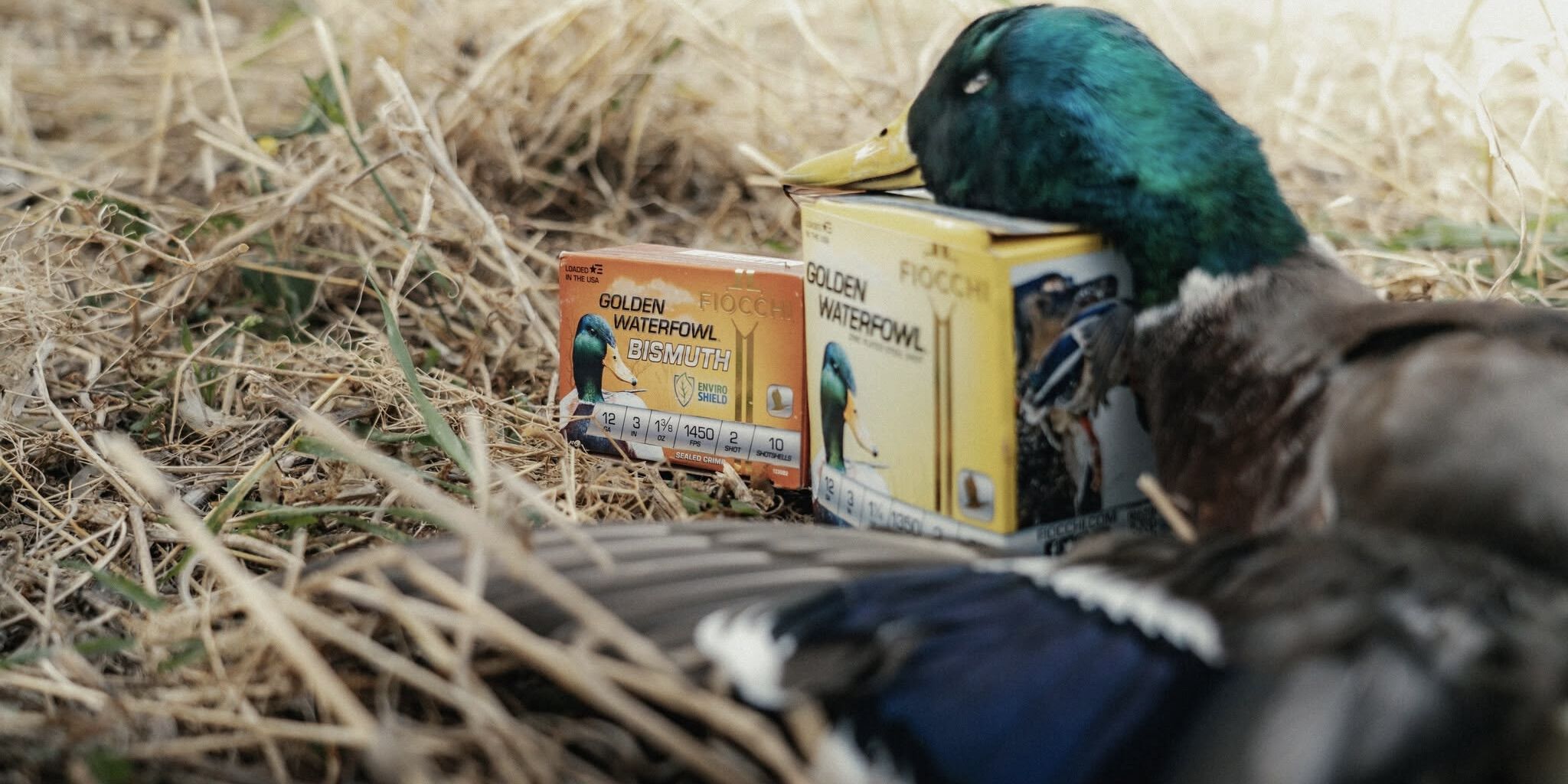
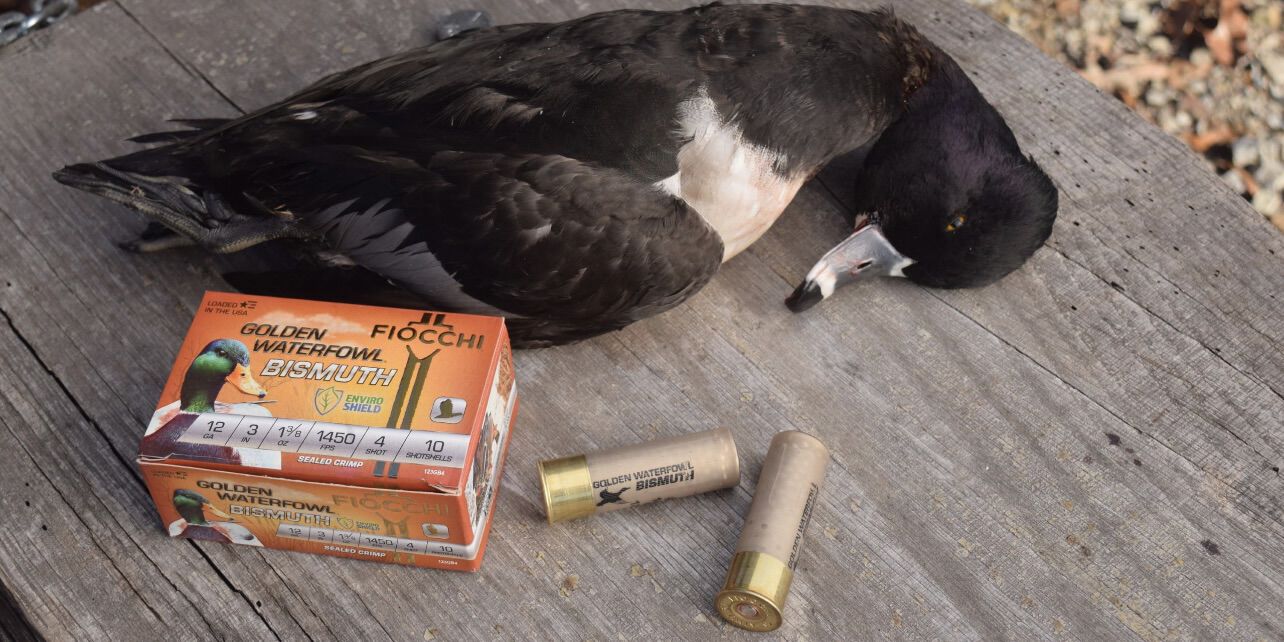
Fiocchi Golden Waterfowl Bismuth was developed around those advantages. Using high-density 9.75 g/cc bismuth, the load gives hunters more energy retention while maintaining the pattern density smaller pellets can provide. The current lineup includes #2, #4, and #6 options in 12 gauge, along with #4 offerings in 20 and 28 gauge.
Those smaller-gauge offerings are particularly interesting as more hunters discover that advances in ammunition can make a 20- or even 28-gauge shotgun a legitimate waterfowl tool when the ammunition, pattern, and shooting distance are properly matched.
Bismuth also offers another advantage for hunters using certain older shotguns. Steel is extremely hard and should only be fired through barrels and choke systems approved for steel shot. Bismuth is considerably softer and can work in some older shotguns that aren't suitable for steel, although hunters should always verify ammunition compatibility with the firearm manufacturer before firing any load.
The tradeoff is cost. Steel remains difficult to beat when hunters expect to shoot a lot of shells. Bismuth costs considerably more, but hunters willing to pay for increased pellet density and retained energy may find the performance benefits worthwhile.
Choosing Shot Size for Ducks
There is no single perfect duck pellet. A better approach is to think about the size of the birds and, just as importantly, the distance at which you expect to shoot them.
For teal buzzing a decoy spread at close range, pattern density is incredibly valuable. Smaller steel pellets such as #4 can put a large number of pellets into the air and create a forgiving pattern on small, fast-moving birds.
For mallards, pintails, gadwalls, and other medium-to-large ducks, steel #2 and #3 are extremely versatile choices. They provide useful pellet energy for typical waterfowl distances while maintaining good pattern density.
The equation changes somewhat with denser materials like bismuth because smaller pellets can retain more energy than steel pellets of the same size.
Instead of memorizing one "best" shot size, think of ammunition selection as balancing two competing needs: enough pellet energy to penetrate effectively and enough pellets in the pattern to consistently hit the bird.
That balance is what makes a good waterfowl load.
It also explains why Fiocchi offers Golden Waterfowl across multiple steel shot sizes rather than trying to make one pellet size serve every situation. A #4 steel load over early-season teal and a BB load for Canada geese are solving very different problems.
Hunting tip: Let your decoy spread guide your ammunition choice. If you're hunting a small pothole where virtually every shot should occur inside the decoys' outer edge, prioritize pattern density. If you're hunting open water or big river systems where shots tend to stretch farther, retained pellet energy becomes increasingly important.
Goose Loads Change the Equation
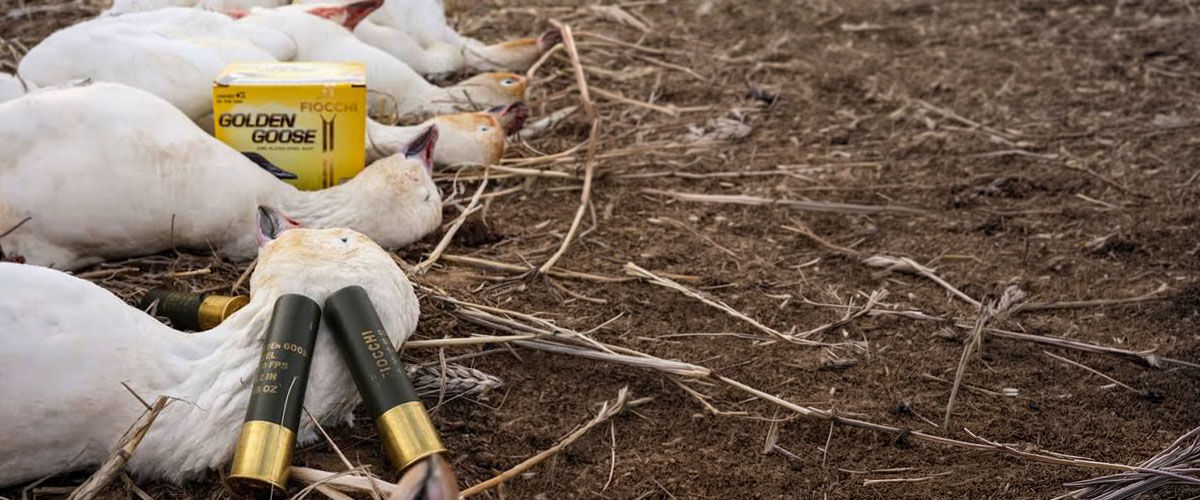
Geese are larger, heavier birds and require more pellet energy than ducks. Larger steel pellets such as #1 and BB are common choices for geese because they retain more energy downrange than smaller steel pellets. Golden Waterfowl's #1 and BB plated-steel offerings provide options specifically suited to this side of the waterfowl spectrum.
But again, hunting style matters.
Canada geese finishing over field decoys at 20 or 25 yards present an entirely different ammunition problem than geese passing at 40 yards. At close range, an extremely large pellet isn't necessarily an advantage if it dramatically reduces pattern density.
This is another situation where bismuth can change the equation. Because denser pellets retain energy better than steel, hunters can often use smaller shot sizes and still achieve effective penetration while putting more pellets into the pattern.
The objective isn't to launch the largest pellets available. It's to deliver multiple pellets with sufficient energy into the bird at the distance where you actually intend to shoot. And when geese are committed to the spread, patience can be as valuable as pellet size. Letting birds finish—wings cupped, feet down and closing the distance—can turn a marginal opportunity into a much higher-percentage shot.
Does More Velocity Mean Better Performance?
Velocity is one of the most visible numbers printed on a shotshell box, and it's easy to assume that faster automatically means better. Waterfowl ammunition isn't quite that simple.
Higher initial velocity can help steel pellets because steel's relatively low density causes it to lose velocity more quickly than denser materials. Modern waterfowl loads have benefited tremendously from improvements in propellants, components, and load design that let steel shot fly efficiently while still producing consistent patterns. But velocity is only one component of shotshell performance.
Increasing velocity can come with tradeoffs, including increased recoil. And regardless of how impressive the muzzle velocity looks on the box, pattern quality and retained pellet energy ultimately matter more than simply choosing the fastest published number.
Golden Waterfowl illustrates the point. Its current 12-gauge 3-inch loads pair a 1 1/4-ounce payload with a published velocity of 1,350 fps. Rather than chasing velocity alone, the load combines plated steel, meaningful payload weight, and controlled performance into a waterfowl load designed around the entire ballistic package.
The same principle applies to payload.
A heavier payload puts more pellets into the shell, but more isn't automatically better if the additional recoil makes you shoot poorly. Waterfowl hunting often involves awkward shooting positions, heavy clothing, and quick follow-up shots. A load you can shoot confidently and consistently has tremendous practical value.
Hunting tip: Don't underestimate recoil during a long hunt. One heavy shell probably won't bother you. A box of them might. If you're anticipating high-volume shooting, a load that balances performance with manageable recoil can help keep your shooting sharp.
Decoying Birds vs. Longer Shots
One of the easiest ways to choose a waterfowl load is to honestly evaluate how you hunt. If most of your birds are shot feet-down over decoys, your ammunition needs are relatively straightforward. Moderate shot sizes, good pellet counts, and an open, forgiving pattern can be extremely effective.
As shooting distances increase, retained energy matters more. That may mean moving to a larger steel pellet, choosing a denser shot material such as Golden Waterfowl Bismuth, or adjusting choke constriction.
But there's another option that doesn't cost anything:
Let the birds get closer. Good calling, concealment, and decoy placement can do more for lethality than moving to a heavier shell.
When birds aren't finishing, waterfowl hunters naturally start changing things. Before changing ammunition, check the hide. Look for faces shining from the blind, dogs moving at the wrong time, uncovered hands, unnatural-looking decoys, or hunters silhouetted against the sky. Sometimes the best ballistic improvement is getting the birds ten yards closer.
Wind Changes More Than the Decoy Spread
Every waterfowler knows wind affects birds, but it also affects pellets. Steel's lower density makes it more susceptible to wind drift and velocity loss than denser shot materials. On windy days—particularly when hunting open prairie potholes, large lakes, or agricultural fields—the advantages of larger steel pellets or denser non-toxic materials can become more noticeable.
Wind should also influence shot selection. A hard crossing bird in a 25-mile-per-hour wind is a very different target from a mallard hanging over the decoys on a calm morning. Rather than trying to compensate with increasingly powerful ammunition, recognizing poor-percentage shooting situations is often the better choice.
There will always be another bird.
Don't Forget Your Choke
Consider ammunition and choke selection together.
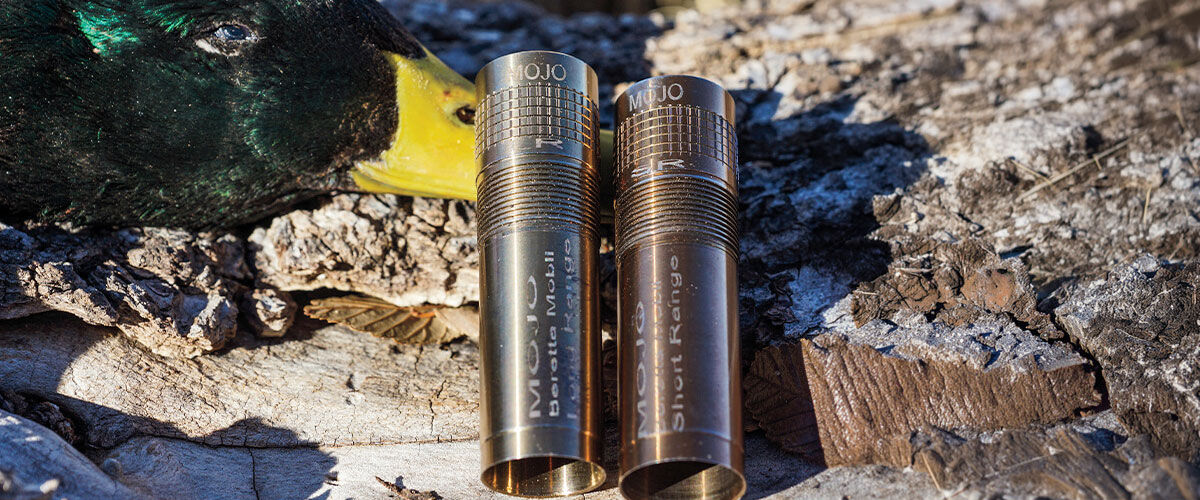
Improved Cylinder can work extremely well for close-range decoy shooting, while Light Modified and Modified are popular starting points for general waterfowl hunting. Longer shooting situations may benefit from tighter constrictions.
But those are starting points—not rules.
Steel patterns differently than bismuth, and individual loads can behave very differently through different choke tubes. It's also essential to make sure your choke and shotgun are approved for the shot material you're using, particularly with hard non-toxic pellets such as steel and tungsten-based materials.
Don't assume that switching from Golden Waterfowl steel to Golden Waterfowl Bismuth—or even moving from #4 steel to #2 steel—will produce an identical pattern through the same choke.
The only reliable way to know how your setup performs is to put it on paper.
Pattern at the Distance You Actually Hunt
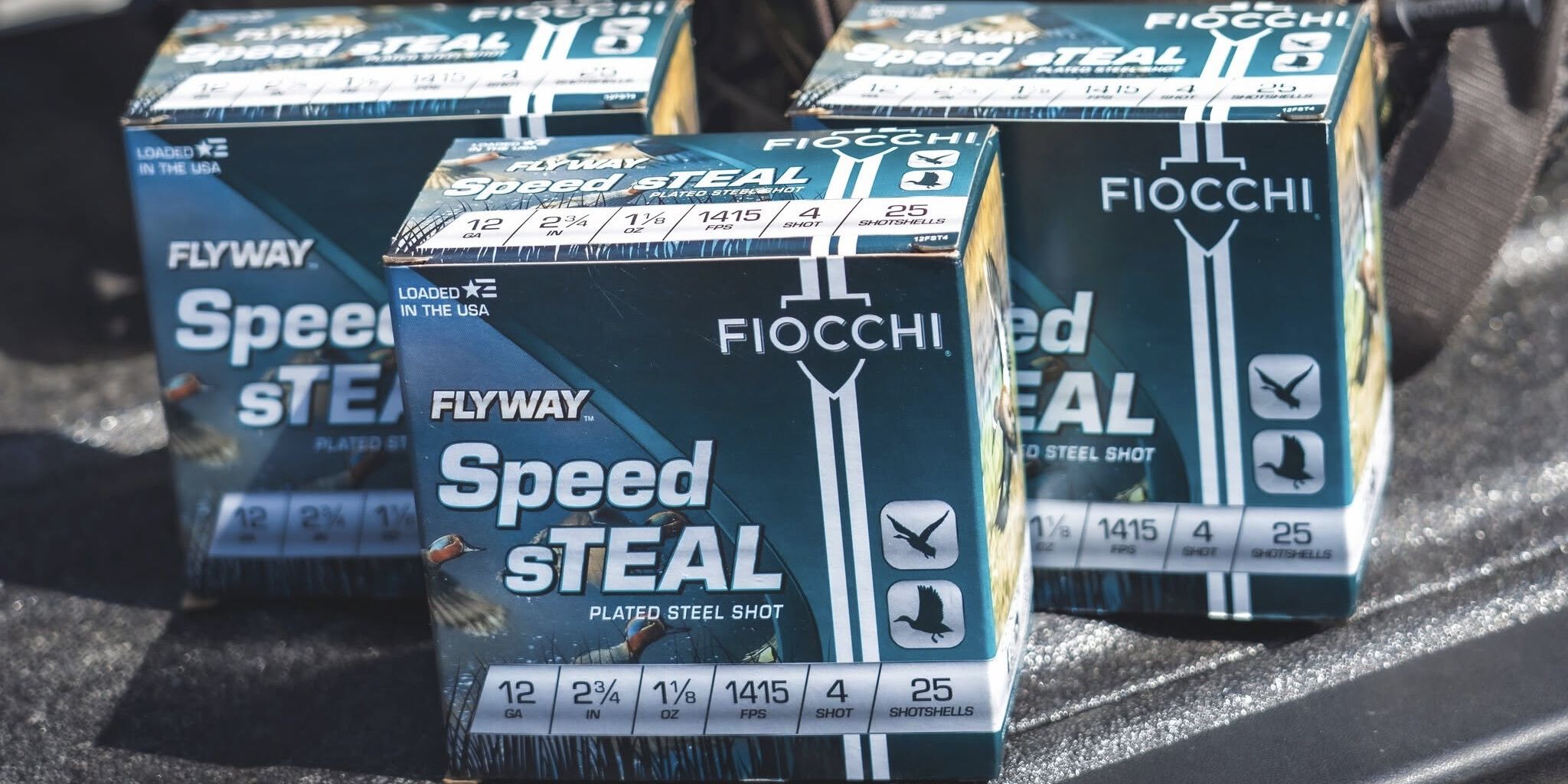
Waterfowl hunters often pattern at 40 yards simply because 40 yards has become something of an industry standard. There's nothing wrong with that, but it may not tell you what you really need to know. If most of your birds are shot between 20 and 35 yards over decoys, pattern your shotgun at 20, 30, and 35 yards. If you're preparing for late-season geese, when shots may be longer, test accordingly.
Look beyond simply counting pellet holes. Examine the entire pattern. Are there large gaps a duck could fly through? Is the center excessively dense? Does the point of impact match your point of aim? Does changing choke constriction improve the pattern—or make it worse? Most importantly, pattern the exact ammunition you intend to hunt with.
Changing pellet size, payload, velocity, or shot material can significantly change how a shotgun patterns. Ten minutes at the pattern board can answer questions that ten hours of debate around the duck camp table never will.
One Load Doesn't Have to Do Everything
Waterfowl hunting is extraordinarily diverse. A September teal hunt in flooded rice has very little in common with a December mallard hunt in flooded timber. Neither resembles a January Canada goose hunt over a frozen cornfield. It shouldn't be surprising that the ideal ammunition changes with the hunt.
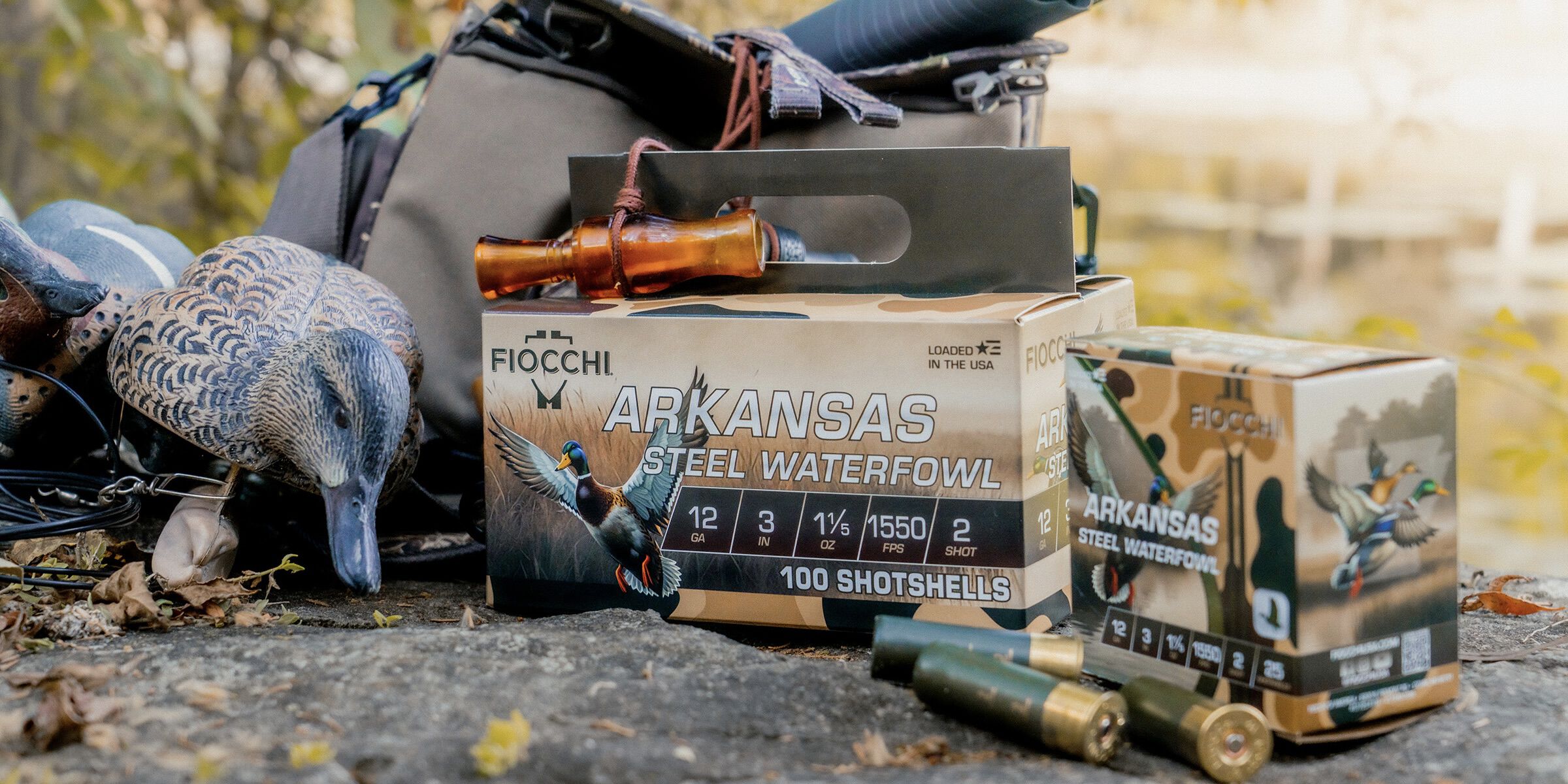
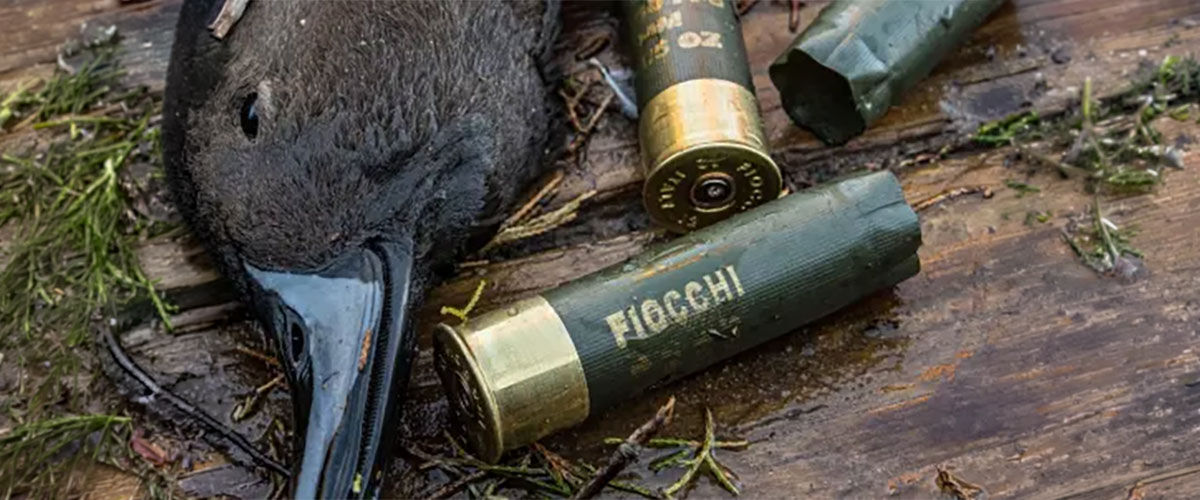
That's also why Fiocchi approaches waterfowl ammunition with multiple solutions rather than a one-load-fits-all philosophy. Golden Waterfowl provides plated-steel options across the shot-size spectrum for hunters who want proven, versatile non-toxic performance. Golden Waterfowl Bismuth gives hunters a denser alternative when greater retained energy, higher pellet counts with smaller shot, or small-gauge versatility are priorities.
The best waterfowl hunters aren't necessarily the hunters carrying the biggest shells or the most expensive ammunition. They're the hunters who understand their equipment, recognize the limitations of their load, and adapt to the conditions in front of them.
Shot size should match the bird. Shot material should match the hunt. Choke should match the distance. And the entire combination should be proven on paper before opening morning.
Because when a flock finally turns on the call, locks its wings and starts dropping through the wind toward the decoys, the last thing you should be thinking about is what's inside your shotgun shell.
You should already know.
Golden Waterfowl
Golden Waterfowl Bismuth
Flyway Series
Flyway Speed sTeal
Golden Goose
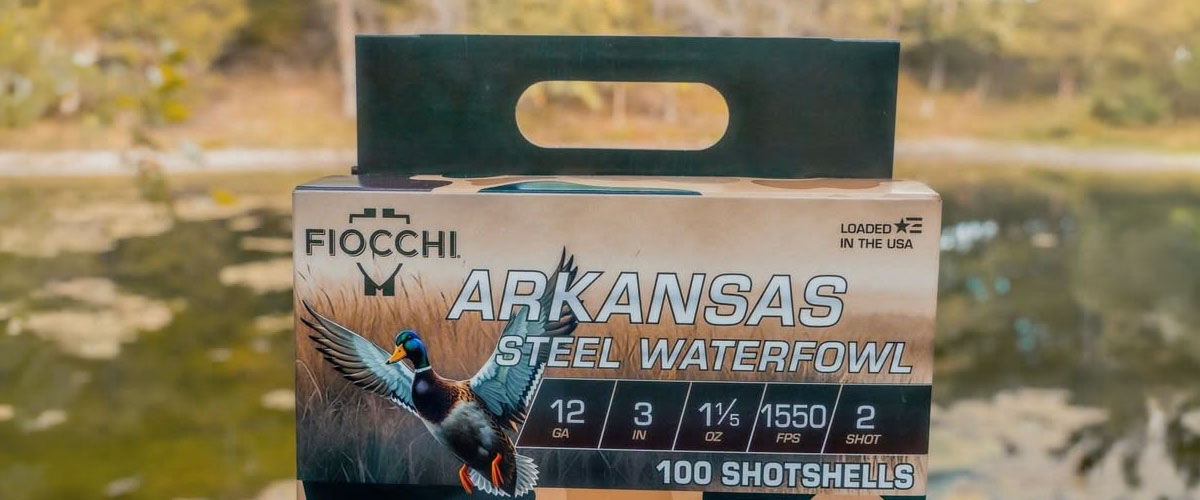
Arkansas Steel